
Migrating from NCR Aloha to Cloud POS: A Hardware Transition Guide
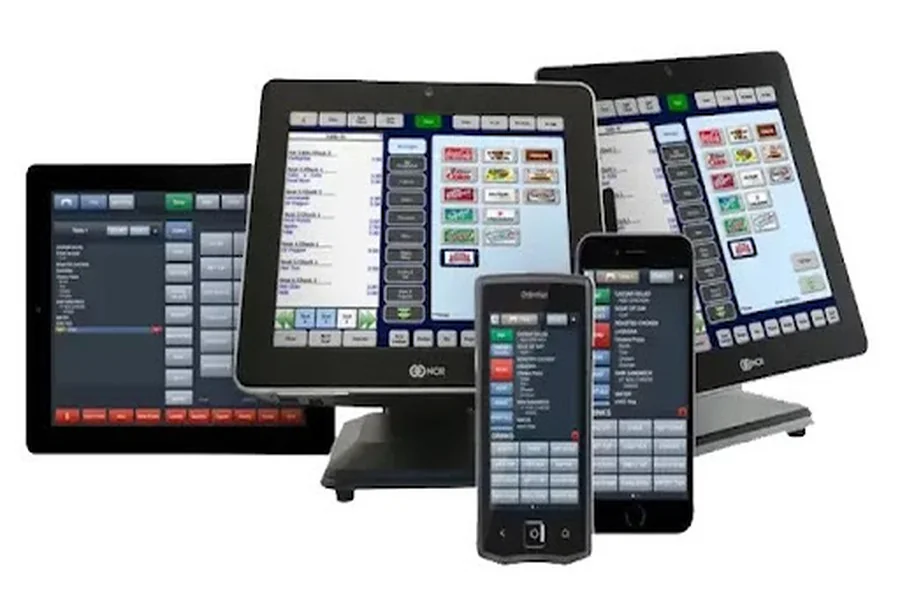
NCR Aloha built its reputation on reliability. Thousands of restaurants ran tight operations on those systems for years. But “built to last” doesn’t mean “built for today.” Your Aloha box is stable, sure. It’s also stuck in the past—disconnected from real-time insights, chained to aging hardware, and bleeding money on maintenance contracts nobody wants anymore.
Migration isn’t about abandoning what works. It’s about stopping the slow bleed. This guide walks you through the entire process, from assessment to go-live, with hard focus on what actually matters: hardware decisions, integration complexity, and how to keep your restaurant running during the switch. By 2026, cloud POS isn’t optional anymore. It’s the only rational move if you want to scale without reinvesting in legacy infrastructure every 18 months.
Why Migrate from NCR Aloha? The Limits of a Legacy POS
Your Aloha system worked. Past tense. The moment your competitors deployed cloud solutions, your infrastructure became a liability. Here’s what you’re actually dealing with.
Lack of Remote Access and Real-Time Data
You can’t see what’s happening in your restaurant unless you’re there. Aloha locks data behind local servers. Offline means blind—no sales visibility, no inventory alerts, no staff oversight when you’re at another location. Cloud POS flips this. You check revenue, voids, and labor metrics from your phone, 15 minutes after close. Try that with Aloha.
The operational cost is brutal. Store managers can’t troubleshoot issues remotely. A payment processor failure? You’re calling support and waiting. Network hiccup? Your register goes dark. Cloud systems sync constantly. If one terminal dies, the others keep running.
Costly Hardware Upgrades and Maintenance
Aloha runs on dedicated terminals and server boxes that cost thousands per unit. When one fails, you’re buying another at full retail. Support contracts? They scale with your location count. Replace a printer, pay for a technician visit. Update the payment gateway, hire a consultant.
Cloud POS runs on iPads and standard Android tablets. A replacement costs $300–500, not $3,000. You can swap hardware yourself. No technician call. No downtime negotiation with your vendor’s support desk.
Hardware refresh cycles are brutal. Aloha terminals age out every 5–7 years. Cloud systems just need internet and a tablet. Same tablet runs for 4+ years without replacement pressure from your vendor.
Challenges with Modern Integrations
Your third-party ecosystem has evolved. Olo, NovaDine, Otter—they’re built for cloud-native POS. Bolting them onto Aloha requires custom middleware, API wrappers, and ongoing support overhead. Menu updates lag. Order routing breaks. You’re paying integration consultants to build bridges nobody should have to build anymore.
Aloha’s data model doesn’t play well with modern architectures. Tax calculations, modifier logic, discount rules—they’re hardcoded differently than cloud systems expect. Integration becomes fragile. One menu update in Olo, and your Aloha promo rules break until someone notices.
The Cloud POS Advantage: Future-Proofing Your Restaurant
Cloud POS isn’t just a software swap. It’s a rewrite of how you operate. Here’s what actually changes when you move.
- Scalability without infrastructure: Add a new location, deploy a tablet and card reader. No server provisioning, no network engineering, no 2-week setup lag.
- Lower upfront costs: Tablets and readers cost a fraction of Aloha terminals. SaaS pricing spreads costs across months, not massive capex.
- Enhanced analytics: Real-time dashboards, labor costing, menu item profitability—data you didn’t have before becomes accessible instantly.
- Improved customer experience: Faster checkout, loyalty integration, mobile ordering—cloud POS talks to your full ecosystem without custom code.
- Simplified management: Software updates push overnight. No technician visits. No version compatibility nightmares.
The real win? You stop paying for things that don’t exist anymore. Legacy support, hardware replacement cycles, integration workarounds—all gone. Your cash flow improves immediately.
Your Step-by-Step Migration Roadmap
Migration isn’t magic. It’s a sequence. Get one step wrong, and you’ll be recovering for weeks. Here’s the path.
Step 1: Assessment & Planning
Start by auditing what you actually have. How many terminals? What peripherals are wired in—receipt printers, kitchen displays, card readers, scales? Which third-party systems are live? What data do you need to move?
This is where you pick your target system. If you’re staying within the NCR ecosystem, Aloha Cloud POS is the native path. It’s built on the same business logic, so menu structures and discount rules translate more cleanly. If you’re exploring beyond NCR, that decision tree gets wider—but your planning stays the same.
Timeline estimate: 2–4 weeks. You’re not doing anything yet, just documenting and deciding.
Step 2: Data Migration
Your menu, customer database, and sales history need to move. This is where cloud POS differs from Aloha most painfully.
Menu export from Aloha: possible but messy. Modifiers, pricing tiers, and promotion rules often require manual cleanup in the new system. If your Aloha menu is complex—lots of conditional discounts, item restrictions, or custom tax logic—expect 3–5 days of QA per location.
Customer data: Extract loyalty records, phone numbers, and purchase history. Cloud systems want normalized data. Aloha’s customer tables are often cluttered with years of test records and orphaned entries. Clean it before import, or your new system inherits the mess.
Sales history: You’re not moving transactional data. That stays in Aloha for audit and tax purposes. But aggregate metrics—daily sales, labor hours, inventory counts—should be exported for historical reporting in your new system’s dashboards.
Timeline: 1–2 weeks, depending on menu complexity and data cleanliness.
Step 3: Implementation & Hardware Setup
This is where most migrations stall. Hardware isn’t just “buy tablets and plug them in.”
Network infrastructure needs verification. Cloud POS demands stable, high-speed internet. If your restaurant runs on consumer-grade Wi-Fi, upgrade now. You need business-class connectivity—redundant ISP lines if you have multiple locations. A single internet outage shouldn’t kill your registers.
Card reader pairing: Modern cloud POS uses Bluetooth or USB card readers. They’re cheaper and more reliable than Aloha’s serial-connected devices. But they need to be tested with your specific tablets and your payment processor before go-live.
Printer configuration: Kitchen displays, receipt printers, label printers—cloud POS handles routing differently. You’ll configure printers in the cloud dashboard, not on a local server. Test print flows during implementation. A broken kitchen printer discovered at dinner rush is a disaster you don’t recover from quickly.
Timeline: 1–2 weeks for a single location. Multi-location rollouts can happen in parallel, but each site needs independent testing.
Step 4: Staff Training & Go-Live
Your team doesn’t care about cloud architecture. They care about speed and muscle memory. Aloha taught them one way to ring up an order. Cloud POS does it differently.
Run training sessions 2–3 weeks before go-live. Show them the new interface, modifier logic, payment screen. Let them practice on a test terminal. Have them ring up 20 orders the new way. Watch where they stumble. Fix those friction points before real customers arrive.
Go-live at a quiet time—off-peak service, not Friday dinner. Your team will be slower. Expect 15–20% longer checkout times for the first week. That’s normal. By week two, they’re faster than they were on Aloha.
Timeline: Training phase 2–3 weeks. Go-live week 1 is rough. Stabilization takes 3–4 weeks.
The Critical Hardware Question: What to Keep, What to Replace
This is the decision that breaks most migrations. Aloha hardware won’t transfer. Your old terminals, servers, and peripherals are incompatible with cloud POS. But “incompatible” doesn’t mean “worthless everywhere.”
Aloha Hardware vs. Cloud POS Hardware: A Comparison
Aloha terminals are server-dependent monsters. They talk to a local application server, store data locally, and fail hard if the network hiccups. Cloud POS is stateless. Tablets sync with the cloud. No local server dependency means no server to maintain.
Network requirements shift. Aloha can tolerate intermittent connectivity if it’s configured for local fallback. Cloud POS needs reliable internet, always. A dropped connection means offline mode—limited functionality until the connection returns.
Peripherals: Your receipt printer might be USB or serial. Cloud POS supports USB and Bluetooth. Aloha’s serial-connected equipment won’t work. You’ll need to replace printers and card readers. Kitchen displays, scales, and label printers also need replacement if they’re old proprietary hardware.
Cost reality: You’re buying new. There’s no migration path for 10-year-old Aloha boxes. Treat them as sunk cost. Donate them or recycle them. Your capex budget is tablets, readers, and printers—not legacy equipment.
The Official Upgrade Path: Migrating to Aloha Cloud POS
NCR’s native solution is Aloha Cloud POS. It’s designed for restaurants already running Aloha, so menu translation is cleaner and payment gateway integration is simpler.
How it works: Aloha Cloud uses a Business Service Layer (BSL) that talks to your local Aloha TakeOut agent running on your back-of-house server. Menu data syncs twice daily from the BSL catalog service. Pricing updates flow automatically. Orders from third-party platforms like Olo route through the local agent to your kitchen without additional middleware.
The payment side is streamlined. Aloha POS v19.9 and newer automatically install AlohaCP (the connected payments module) during setup. You don’t need separate payment gateway installers anymore. Updates download and prompt for installation automatically.
Release stability matters. Aloha Cloud moves through Controlled Deployment (small group testing) to Pilot (3-week window, minimum 50 restaurants, 100 devices, 15 Quick Service and 15 Table Service locations) before General Availability. If you’re below the minimum supported version, you’ll need to upgrade before support kicks in. No exceptions.
Benefit for Aloha users: Your discount logic, promo rules, and modifier structures transfer with less friction than a complete system swap. Your people know the terminology. Loyalty rules stay the same. It’s evolution, not revolution.
Essential Hardware for Any Modern Cloud POS System
Regardless of which cloud platform you choose, these are non-negotiable.
- High-speed internet with redundancy: Fiber or business-class broadband. Backup connection (cellular hotspot or secondary ISP). Cloud POS doesn’t work offline.
- Tablets (iPad or Android): iPad Air or newer (Apple) or mid-range Android tablets (Samsung, Lenovo). Budget $300–500 per unit. Replace every 4–5 years.
- Bluetooth/USB card readers: EMV and NFC capable. Pair them with your payment processor’s certified hardware. Costs $100–300 per reader.
- Modern receipt and kitchen printers: Thermal USB or Bluetooth printers. Network-capable kitchen displays if you want digital order routing instead of paper tickets.
Your total hardware investment per location: 2–3 tablets, 2–3 card readers, 1–2 printers, plus network upgrades. Budget $2,500–4,500 per location. Compare that to replacing an Aloha server and terminals ($8,000–12,000) and the economics become obvious.
Choosing the Right Solution Beyond the NCR Ecosystem
Aloha Cloud POS is the path of least resistance if you’re already on Aloha. But it’s not the only option. The cloud POS market is mature now. You have legitimate alternatives.
When you’re evaluating restaurant pos systems, focus on what matters: integration ecosystem, analytics depth, payment processing transparency, and support response times. Not all cloud POS platforms are equal.
Some prioritize speed (Clover, Square). Some focus on enterprise features (Toast, Oracle). Some are purpose-built for delivery integration (Olo’s own POS products). Your choice depends on what your restaurant actually does.
Questions to ask any vendor: What’s your uptime guarantee? How do you handle offline orders? What integrations are native vs. custom-coded? What’s the cost to add a location? How long does implementation take?
The best system isn’t the one with the most features. It’s the one that doesn’t require a consultant to set up and doesn’t break your kitchen workflows.
Conclusion: Migration is an Investment, Not an Expense
Migrating from NCR Aloha to cloud POS is work. You’ll spend money, staff time, and patience. But it’s work that pays back within 12 months through reduced hardware costs, lower support overhead, and the ability to make real-time decisions about your business.
The migration roadmap is straightforward: assess, plan, migrate data, implement hardware, train staff, go live. Hardware is the biggest variable. Plan for new equipment across the board. Legacy Aloha boxes won’t transfer. Accept that, budget for it, and move forward.
By 2026, Aloha Cloud POS or any modern cloud alternative will process orders faster than your old Aloha ever did. Your team will adapt in weeks. Your data will be accessible from anywhere. Your capex will drop. That’s worth the 8–12 week migration window. Stop maintaining the past. Start running the present.