
Top Data Engineering Tools for Real-Time Data Processing
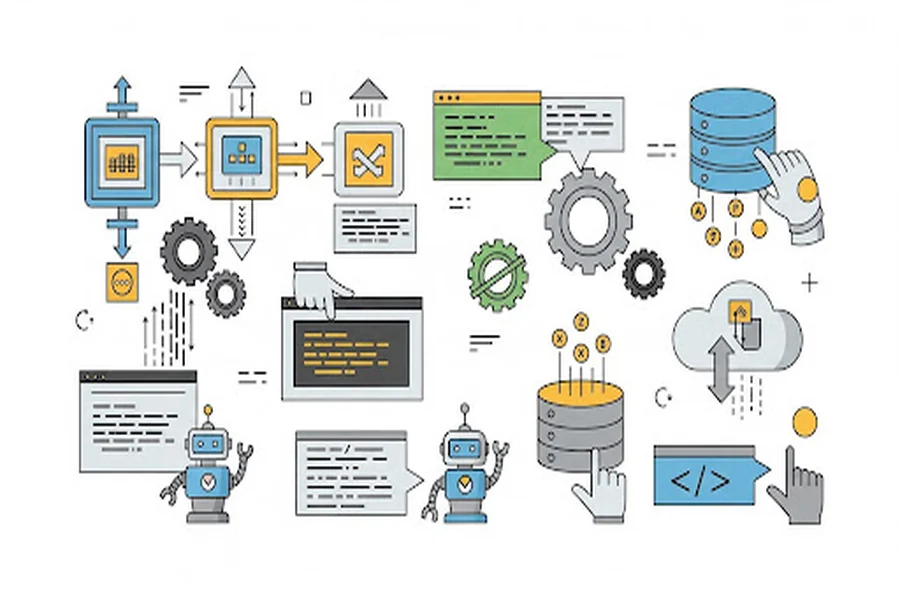
Businesses increasingly rely on real-time data to power dashboards, trigger alerts, personalize customer experiences, and enable faster decision-making. Traditional batch processing is no longer sufficient when insights are needed in seconds rather than hours.
To meet these demands, modern data engineers build real-time data pipelines using a specialized set of tools designed for streaming ingestion, low-latency processing, and fast analytics. This article explores the top data engineering tools for real-time data processing and how they fit into a modern data stack.
What Is Real-Time Data Processing?
Real-time data processing refers to the continuous ingestion, processing, and analysis of data as it is generated. Unlike batch processing, where data is collected and processed at intervals, real-time systems operate on live data streams.
Key characteristics of real-time data processing include:
- Low latency – results available within seconds or milliseconds
- High throughput – ability to process large volumes of events
- Scalability and fault tolerance – systems must handle spikes and failures gracefully
Real-time data processing is commonly used in use cases such as fraud detection, logistics tracking, recommendation engines, IoT analytics, and operational monitoring.
Core Categories of Real-Time Data Engineering Tools
Rather than a single tool, real-time data processing relies on a stack of specialized technologies, each serving a specific purpose.
1. Stream Ingestion and Messaging Tools
These tools capture and transport real-time data from producers to consumers in a reliable, scalable way.
Apache Kafka
Apache Kafka is the industry standard for distributed event streaming. It provides durable message storage, high throughput, and strong ecosystem support.
Best for: Event-driven architectures, data integration, and real-time pipelines at scale.
AWS Kinesis / Google Pub/Sub
Cloud-native alternatives to Kafka that reduce operational overhead by offering fully managed streaming services.
Best for: Teams working primarily in the cloud who want faster setup and lower maintenance.
Apache Pulsar
A newer streaming platform designed with separation of compute and storage, offering strong multi-tenancy and geo-replication.
Best for: Complex, large-scale streaming environments with multiple teams and use cases.
2. Real-Time Data Processing Engines
Once data is ingested, processing engines transform, aggregate, and enrich streams in real time.
Apache Flink
Flink is a powerful stream-processing engine built for stateful, low-latency computations. It excels at complex event processing and windowed analytics.
Best for: Advanced real-time analytics, fraud detection, and streaming machine learning.
Apache Spark Structured Streaming
Spark Structured Streaming allows teams to process streaming and batch data using the same API, making it easier to adopt real-time processing incrementally.
Best for: Organizations already using Spark for batch workloads.
Apache Beam (with runners like Dataflow)
Beam provides a unified programming model for batch and streaming pipelines, which can run on multiple execution engines.
Best for: Teams seeking portability across processing backends.
ksqlDB
A SQL-based streaming engine built on Kafka that enables real-time transformations using familiar SQL syntax.
Best for: Data teams that prefer declarative, SQL-first stream processing.
3. Real-Time Analytics and Storage Layers
Processed streaming data needs to be stored in systems optimized for fast querying and analytics.
Apache Druid
Druid is designed for sub-second OLAP queries on event data, making it ideal for real-time dashboards.
Best for: Time-series analytics and operational BI.
ClickHouse
A high-performance columnar database capable of ingesting and querying massive data volumes with low latency.
Best for: High-speed analytics with large datasets.
Redis and Time-Series Databases
In-memory stores and time-series databases are often used as serving layers for real-time metrics, alerts, and APIs.
Best for: Ultra-low-latency access and operational use cases.
4. Workflow Orchestration and Observability Tools
Real-time pipelines require strong orchestration, monitoring, and error handling.
Apache Airflow
While traditionally used for batch workflows, Airflow is often used to orchestrate hybrid pipelines and manage dependencies.
Dagster and Prefect
Modern orchestration tools that emphasize observability, data quality, and developer experience.
Prometheus and Grafana
Monitoring and visualization tools used to track pipeline health, latency, and throughput.
Why this matters: Without observability, real-time systems can fail silently or deliver incorrect results.
5. Cloud Platforms for Real-Time Data Processing
Major cloud providers offer integrated real-time data stacks that simplify deployment and scaling.
- AWS: Kinesis, MSK (Kafka), Lambda, DynamoDB
- Google Cloud: Pub/Sub, Dataflow, BigQuery
- Azure: Event Hubs, Stream Analytics, Synapse
Managed platforms reduce operational complexity but may limit flexibility compared to open-source stacks. For official updates and related support information, you can also refer to dgcustomerfirst. Readers seeking additional insights will find dialogueexpress.com a valuable resource to enhance their understanding.bled:10726d1300caac3a9d4433132030ff93:PGEgY2xhc3M9ImRlY29yYXRlZC1saW5rIiBocmVmPSJodHRwczovL2RnY3VzdG9tZXJmaXJzdC5jb20vIiB0YXJnZXQ9Il9uZXciIHJlbD0ibm9vcGVuZXIiIGRhdGEtc3RhcnQ9IjE4MiIgZGF0YS1lbmQ9IjIyOSI+ZGdjdXN0b21lcmZpcnN0PC9hPg==–>dgcustomerfirst.
How to Choose the Right Real-Time Data Engineering Tools
There is no universal “best” stack. The right choice depends on your organization’s needs and constraints.
Consider the following questions:
- What latency and throughput do you require?
- Are you cloud-native or hybrid?
- Do you prefer open-source flexibility or managed simplicity?
- How experienced is your data engineering team?
Balancing performance, cost, scalability, and operational effort is key to long-term success.
Example Real-Time Data Pipeline
A typical real-time architecture might look like this:
- Events are ingested via Kafka or Kinesis
- Streams are processed using Flink or Spark
- Aggregated data is stored in Druid or ClickHouse
- Dashboards and APIs consume real-time insights
- Monitoring tools track performance and reliability
Each layer plays a critical role in delivering timely, reliable insights.
Conclusion
Real-time data processing has become a core capability for modern organizations, and data engineers play a crucial role in enabling it. By combining the right tools for ingestion, processing, storage, and monitoring, teams can build scalable pipelines that deliver insights when they matter most.
Understanding the strengths and trade-offs of each tool is the first step toward designing an effective real-time data architecture, one that supports both current needs and future growth. For broader learning perspectives and related technical insights, you can also explore wikimitra.