
Repair or Replace? Five Clues That Settle the Question for a Santa Ana Roof
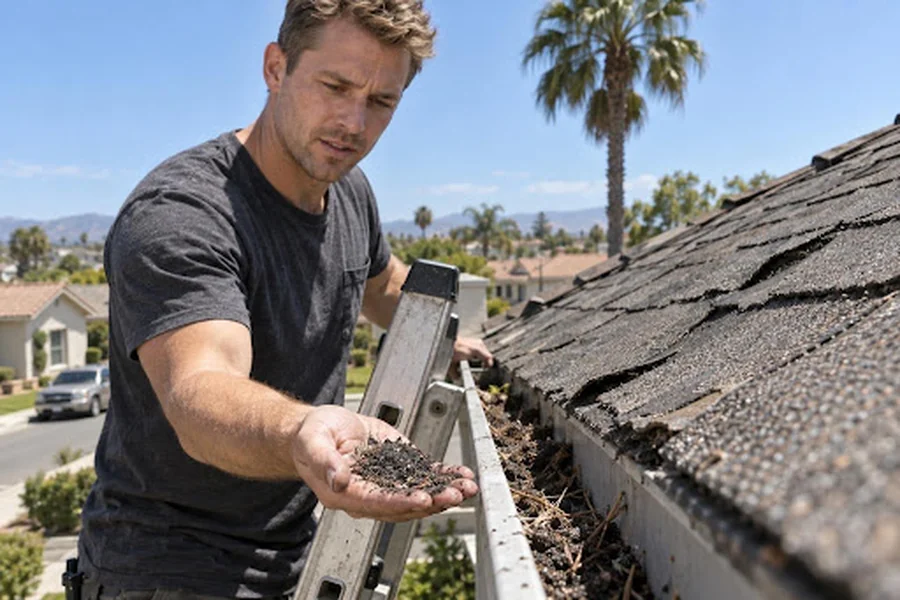
Every leaking roof poses the same riddle to its owner. Spend a few hundred dollars on a repair and hope it holds, or spend a great deal more on a new roof and stop thinking about it for twenty years. The wrong answer in either direction is expensive: patching a roof that is finished wastes money on borrowed time, and replacing one that had years left wastes far more.
The good news is that the answer is rarely a judgment call once the right evidence is on the table. Five clues, most of which a homeowner can gather before anyone climbs a ladder, settle the question for nearly every roof in Santa Ana.
Clue one: the age and the material
Start with what the roof is made of and when it went on. Three-tab asphalt shingles in the local climate commonly give fifteen to twenty years, architectural shingles somewhat longer. Concrete and clay tile can last for generations, but the underlayment beneath the tile does not, and a tile roof from the 1990s may be leaking through felt that has simply worn out while the tiles above it look new.
If the previous owner left no records, the permit history at the city and the manufacturer stamp on a shingle or tile will usually date it. A roof in the last quarter of its expected life makes replacement the default and repair the exception.
Clue two: where the leaks are
One leak in one place points to one cause: a cracked pipe boot, a failed skylight seal, a lifted shingle near a vent. Water showing up in two or three rooms at once, or returning in a new spot after each repair, points to a system that has reached the end. Draw the leak locations on a rough sketch of the house. A single dot is a repair. A scatter is a replacement conversation.
Clue three: what the attic says
The attic is the honest witness. With a flashlight on a bright day, look for pinpoints of daylight through the deck, dark stains spreading along rafters, wet or compressed insulation and any sagging between rafters. Light coming through in a few spots around a vent is a flashing repair. Stains across many bays, a deck that feels soft underfoot, or mold on the sheathing mean the water has been getting in for a long time, and the deck itself may need replacing along with the roofing.
Clue four: the granules and the gutters
Asphalt shingles shed their mineral granules as they age, and the gutters collect the evidence. A thin dusting after a storm is normal. Gutters half full of granules, bald patches on the shingles, and edges that curl upward mean the mat is exposed and the roof is drying out from the top down. On tile roofs the equivalent clue is tile fragments and underlayment flakes in the gutters after a windy week.
Clue five: the math
Get a written price for the repair and a written price for the replacement from the same contractor, with the scope spelled out for each. A rule of thumb many roofers use is that when the repairs needed this year approach a meaningful fraction of a replacement, or when this is the third repair in a few years, replacement wins. A homeowner weighing roof repair in Santa Ana against a new roof should ask the contractor one direct question: if this were your house, which would you do, and why? A good one will answer with the clues above rather than with a sales pitch.
The Santa Ana factors
Two local conditions push the math. The fall winds lift and loosen marginal roofing every year, so a roof that is barely holding on in September tends to fail in a November storm. And a large share of the city’s homes carry roofs that have been overlaid or patched by previous owners, which limits repair options, since many cities will not permit a third layer. A clear framework for the decision, including when an inspection alone is the right first step, is laid out in this guide to repair, replacement or just an inspection.
Putting the clues together
Read all five together rather than any one alone. A young roof with a single leak and a clean attic is a repair, however alarming the drip looked. An old roof with scattered leaks, a stained deck and gutters full of granules is a replacement, however small the first symptom seemed. Most roofs fall clearly on one side or the other, and established local contractors such as PWC Roofing will say so plainly after one inspection, which is the main reason to call a company that does both repairs and replacements rather than one that only sells new roofs.
Quick answers
Can a tile roof be repaired without replacing the tiles?
Usually yes: the tiles are lifted, the underlayment replaced, and the same tiles reset.
Is a roof inspection worth paying for?
When the five clues disagree, a professional inspection is the cheapest way to settle the question before spending on either option.
How long does a replacement take?
Most single-family roofs in the area are completed within a few days once materials are on site.