
Road to IRCC Canada PR Requirements: A Checklist for 2026
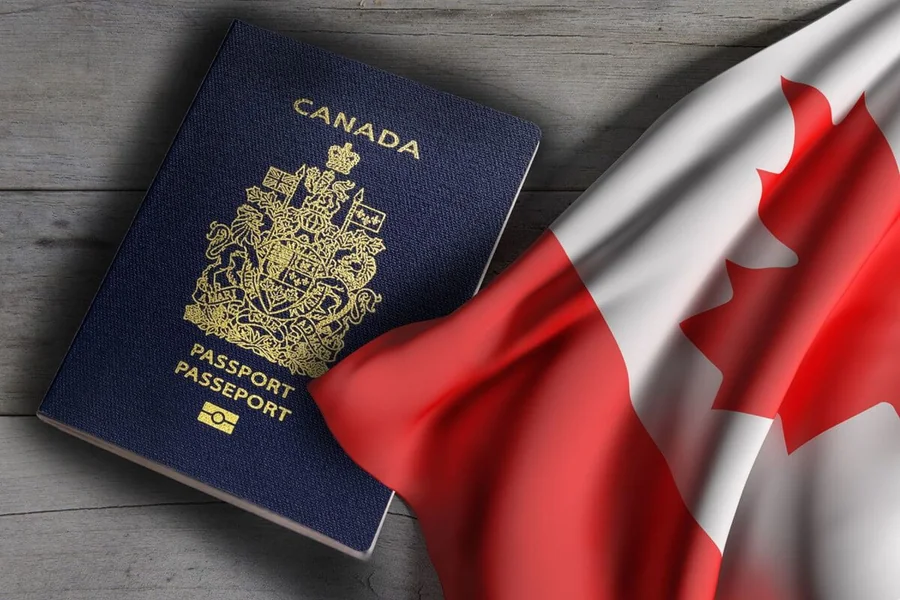
IRCC Canada PR document requirements are the paperwork equivalent of shovelling your driveway in February: necessary, unglamorous, and if you miss a spot, the whole job turns into a mess.
Before Immigration, Refugees and Citizenship Canada (IRCC) even glances at your file, you’re expected to have identity papers, education records, a full work history, and police checks lined up, plus proof you can support yourself once you land.
Some of these documents arrive at a Canada Post pace, and one missing piece can send your whole application back to square one.
This guide covers what IRCC actually wants, where applicants usually get stuck, and how lining up certified document translation services in Canada early keeps your file out of the penalty box.
What Canada PR Document Requirements Actually Look Like
Canada has tightened up how it manages permanent residency applications over the past couple of years. Fees got a bump earlier in 2026, and IRCC has moved nearly every stream onto digital portals, where automated checks flag missing fields before a human ever opens your file.
What hasn’t changed is the underlying ask. Every applicant still has to prove three things:
- who they are,
- what they’ve done,
- and what they want to do next.
It is simple in theory. In practice, it means paperwork stacked higher than a Tim Hortons line on a Monday morning.
The categories that make up IRCC Canada PR document requirements stay pretty predictable across programs like Express Entry, Provincial Nominee Programs, and family sponsorship, even when the specific forms and intake steps differ from stream to stream.
Common Canada PR Document Requirements Across Programs
Whether you’re applying through the Canadian Experience Class, a base PNP, or family sponsorship, the document categories are mostly shared; think of it as one big checklist with a few regional accents. You will need:
- Identity records
- Language test results
- An education assessment if your credentials are foreign
- A complete work history
- Police certificates
- Medical clearance
- Proof of funds in most cases
- Translations for anything not already in English or French
Moreover, the specifics shift depending on the program, but knowing these groups exist gives you a checklist you can start building months before you ever hit submit. Because nothing says “rookie mistake” like scrambling for a birth certificate the week your intake opens!
#1 Identity and Civil Status Documents
Your passport sits at the top of every checklist, and for good reason. IRCC wants it valid through your entire application period, ideally with at least six months left when you submit. Renew early if the expiry date is creeping up; chasing a new passport mid-application is the kind of avoidable headache that can stall a file for weeks, and nobody wants to spend that long in a Service Canada line.
Beyond the passport, you’ll need civil status records:
- Birth certificates for you and any dependents
- Marriage certificates, if applicable
- Divorce judgments or death certificates of previous spouses
- Adoption papers, where relevant
These confirm the relationships you’ve declared on your application, and officers cross-check them against the rest of your file. If any document is issued under a name different from your passport, attach a short letter of explanation so nobody has to play detective.
And don’t sleep on your photos. IRCC publishes exact dimensions and quality rules for the PR portal, and photo rejections that miss the mark are more common than you’d think. Save the toothy grin for your driver’s licence photo instead.
#2 Language Tests and Credentials
Most economic PR programs require an IRCC-approved language test in English, French, or both. Accepted options include:
- CELPIP and IELTS General Training for English
- TEF Canada or TCF Canada for French
Results stay valid for two years from the test date. Test centres also fill up fast whenever a major program opens, so give yourself a three-month buffer; booking a slot last minute is about as easy as finding parking downtown on a Saturday.
If you studied outside Canada, you’ll likely need an Educational Credential Assessment (ECA) from a designated organization such as:
- World Education Services
- ICES
- IQAS
- CES
The ECA confirms your foreign degree, diploma, or certificate stacks up to a Canadian one. Reports stay valid for five years, which is generous, but the assessment itself can take several weeks once you’ve submitted transcripts and verification forms. Start this one early — it’s not a task you knock off over a long weekend.
#3 Record of Work Experience
Work history is where Canada PR document requirements get the most scrutiny, and where applications tend to get complicated fast. IRCC wants a continuous timeline going back ten years or to your eighteenth birthday, whichever is shorter, with no unexplained gaps.
For each relevant position, plan to provide a detailed reference letter on company letterhead confirming:
- Your job title
- Full duties
- Employment dates
- Weekly hours
- Salary
- The company’s contact details
Reference letters trip up applicants more than almost anything else. Your duties need to match the National Occupational Classification (NOC) code you’re claiming, but they can’t read like a copy-and-paste job from the NOC website: officers spot that faster than a Canadian spots a queue-jumper.
Have letters written in clear, original wording, signed by your direct supervisor or HR, and backed up with pay stubs, tax documents like T4S or Notices of Assessment for Canadian work, and copies of your employment contracts.
If reference letters come from employers abroad and aren’t in English or French, certified translation services for business documents handle the multi-page, multi-stamp packages that companies typically produce better than a general translator would.
#4 Financial Proof
Most economic applicants must show proof of funds: enough money in accessible accounts to support themselves and any accompanying family during their first months in Canada. The minimum amount updates annually based on the Low Income Cut-Off thresholds, rising as your family size grows — because groceries don’t get cheaper just because you’re new here.
Proof should come as official bank letters on letterhead, listing your account numbers, balances, average balance over the past six months, and any outstanding debts. Investment statements and term deposit confirmations count too, as long as they’re easily accessible.
What doesn’t count: equity in property, vehicles, or anything you can’t quickly turn into cash. Sorry, but your cottage up north doesn’t help you here, however lovely the view.
Certified Translation Requirements for IRCC Applications
Any document not already in English or French needs an IRCC certified translation before it goes anywhere near your file; no exceptions, no “close enough.” This applies across every stream, so whether you’re going the certified translation IRCC route for a family sponsorship file or dealing with IRCC Express Entry translation needs, the standard doesn’t change.
A proper certified translation for IRCC includes three things: the original document, the translated version, and a signed declaration from the translator confirming accuracy and their qualifications. Some provinces also require the translator to be a member of a recognized translators’ association, worth checking before you pay for anything.
Keep your IRCC certified translations organized right alongside the originals when you build your file; mixing them up, or submitting a translation without its matching original, is a fast way to get your application bounced back. And if you’re translating multi-page reference letters or civil documents from abroad, working with a service that specializes in certified translation for IRCC submissions saves you from redoing the job later.
Avoid the Small Mistakes That Slow Files Down
Once the major Canada PR document requirements are squared away, applications often trip on the small stuff. A few classics:
- Names spelled differently across documents, especially between passports and birth certificates, get flagged and need a letter of explanation.
- Travel history that doesn’t match your passport stamps causes the same headache.
- Digital photos with slightly wrong dimensions get rejected outright, no exceptions.
- Signatures in the wrong spot, or third-party electronic signatures pasted into the IRCC portal instead of using its built-in tools, can trigger automatic returns. Forms like the IMM 1344 and IMM 5669 are especially fussy about this.
The most preventable mistake, though, is also the most common: hitting submit before everything’s actually ready. IRCC runs a completeness check on every file, and an incomplete application gets returned. Your fees might come back, but you could lose your spot in a competitive intake — and that’s a rough way to spend a Tuesday.
Final Thoughts on Canada PR Document Requirements
The list of Canada PR document requirements is long, but it’s predictable. Applicants who move through quickly aren’t always the ones with the flashiest profiles; they’re the ones who started gathering paperwork months before their window even opened.
In addition, language tests, police certificates, ECAs, and certified translations take the longest, so they’re worth starting today rather than tomorrow (or, let’s be real, next month).
Build your file methodically. Cross-check names and dates across every document, keep clean digital copies in one consistently labelled folder, and the application itself becomes a single afternoon of careful uploading. Everything that makes that afternoon go smoothly happens in the months leading up to it: kind of like shovelling that driveway before the snow piles up.
FAQs on Canada PR Document Requirements
1. Do I Need to Translate Documents That Are Already in English?
No. If your supporting documents, such as passports, certificates, and employment records, are already in English or French, you submit them as they are. The translation rule only applies to documents not in either official language.
If a document is partially in English with stamps or seals in another language, only those foreign-language portions need translating, with the rest submitted as-is and the partial translation clearly marked.
2. How Long Are Canada PR Documents, Such as ECAs and Language Tests, Valid?
Language test results from CELPIP, IELTS, TEF, or TCF stay valid for two years from the test date and must still be valid on the day you submit your PR application. ECA reports are valid for five years.
Police certificates from your current country of residence must be issued within six months of submission, and medical exams stay valid for one year. Cross-check every expiry date before uploading anything — IRCC can reject a document that’s already expired at submission.
3. What Happens If My Application Is Missing a Document When I Submit?
IRCC runs a completeness check on every application against its Canada PR document requirements checklist before it ever reaches an officer. If something’s missing, the file gets returned rather than reviewed, and while your fees are usually refunded, you could lose your place in a competitive intake.
That’s why building your checklist months ahead, rather than the week before, is worth the effort.