
How Word Puzzles & Other Games Reward Two Different Types of Thinking
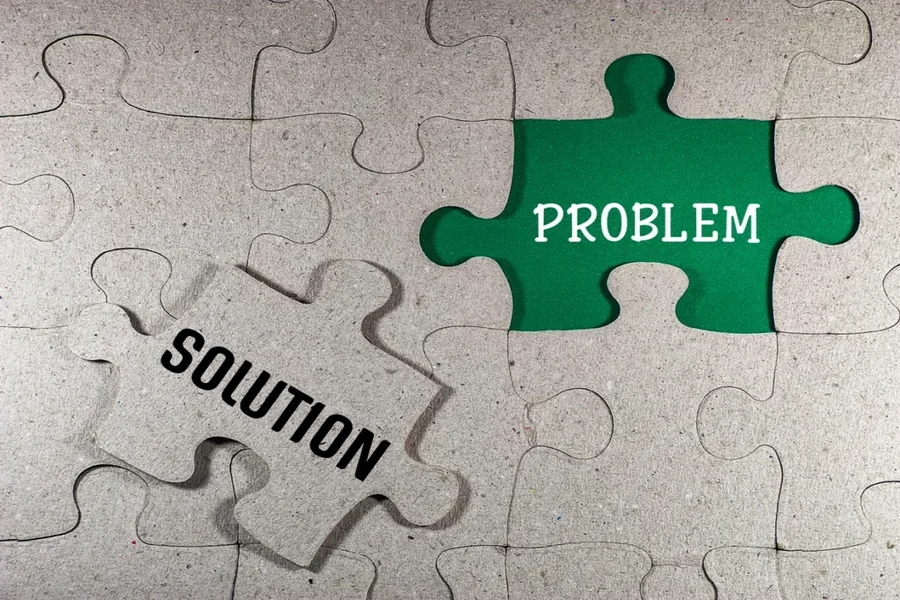
It’s generally accepted that playing games is a great way to stimulate your mind and develop sharper mental capacity. Of course, games come in many shapes and forms so it stands to reason they require different mental processes to successfully compete. Some games force you to think on your feet and come up with creative solutions, while others demand discipline and precision.
Blackjack and word puzzles are excellent examples of games that suit people with specific cognitive styles. Both are based on evaluating multiple possibilities and arriving at the best possible answers, but the actual process used to find solutions is anything but similar.
Convergent vs. Divergent Thinking
Psychologists have long ago defined two different styles of cognitive engagement, each of which represents an evolutionary advantage for the human race. Both of these modes are very useful for solving difficult problems and achieving important goals, but they don’t work equally well in every situation. Convergent thinking entails precise, analytic reduction of complexity through weighing each option and identifying the one that fits the problem at hand. It works best when the priority is to choose correctly from a set of well-defined options. Convergent thinking goes in the opposite direction and aims to expand the set of choices in the hope of stumbling into a new approach. It’s most optimal for tasks that don’t have an obvious solution and thus require original thinking and creativity to complete.
Blackjack Players Depend on Probability Assessment
Card games like blackjack are based on probabilities, and great players are always aware of the odds for each decision. Since a deck of cards is finite, a player can realistically grasp how likely his move is to bring about a positive result. When you draw another card and you are already at 18, the chances of hitting 21 can be calculated with certainty (given that you know which cards are left in the deck). That’s a textbook example of convergent thinking, one where each course of action has a clear risk-reward ratio that can be calculated with relative certainty. Of course, picking the most likely win condition doesn’t guarantee anything since the outcomes are still random, but in the long run players who correctly crunch the numbers tend to win much more frequently.
Word Puzzles Reward Creative Thinking
Word puzzles work totally differently, and can’t be solved using statistics. The player likely already has the target word in his vocabulary but the trouble is remembering which one it is. Instead of choosing between well-defined but risky options like in card games, word puzzle contestants need to seek out a solution they are initially clueless about, with only limited hints. Divergent thinking works much better in this scenario, as players try to work their way from words that almost fit to ones that actually do, widening their scope as they go. This is an associative process and people who know how to explore the corners of their minds have an advantage.
Can You Be Great at Both at the Same Time?
One mode of thinking doesn’t automatically exclude the other, and it’s possible to switch between them depending on the task at hand. It’s not rare for word puzzle masters to have an account with a Canada online blackjack brand and achieve success on both sides. Some individuals may naturally be more talented for one type of thinking, but with practice they can reach at least a respectable level with the other. Awareness of the need to alter your thinking to fit the situation is the first step, which is why understanding the terminology used in academic psychology actually makes sense for gamers.